Taking a Fresh Look at Infection Prevention
- Sales Team
- Canonbury Blog
- 14 Oct 2026 views

Infection Prevention in Podiatry Clinics: Reviewing Everyday Routines
Infection prevention is part of everyday life in podiatry and healthcare clinics. Yet familiar routines can make it harder to spot overlooked surfaces, changes to equipment or inconsistencies between colleagues. Taking a fresh look at how your clinic operates can help identify where cleaning procedures need updating.
Walk into a busy clinic and you’ll see routine in action. The treatment room is prepared, equipment is set out, surfaces are cleaned and the next patient is welcomed in. Repeat those actions often enough and they become second nature.
Routine helps clinicians focus on the person in the chair. But it also has a blind spot: the more familiar something becomes, the easier it is to stop noticing it.
Why should infection prevention routines be reviewed?
Clinical environments change. A new treatment chair arrives, a touchscreen replaces paper records or equipment is moved to make appointments run more smoothly. New colleagues may also bring different ways of working.
Each change is a reason to check whether existing cleaning procedures still reflect what happens in the room.
A useful question to ask is:
“if you were setting up your clinic from scratch today, would you use exactly the same infection prevention procedures?”
A review may confirm that your current approach works well. It may also reveal equipment missing from a cleaning schedule, unclear responsibilities or temporary arrangements that have quietly become permanent.
Which high-touch surfaces can be overlooked?
High-touch surfaces are items or areas that people handle frequently. Some are obvious, others receive less attention because they sit outside the immediate treatment area.
Examples to consider when reviewing your clinic include:
- Treatment chair controls and adjustment handles.
- Examination lamps and switches.
- Drawer and cupboard handles.
- Trolley handles and work surfaces.
- Keyboards, mice and touchscreens.
- Shared equipment.
- Door handles and payment devices.
Look at the room in terms of movement as well as treatment. Where do your hands go during an appointment? What does the patient touch? Which items are shared between colleagues?
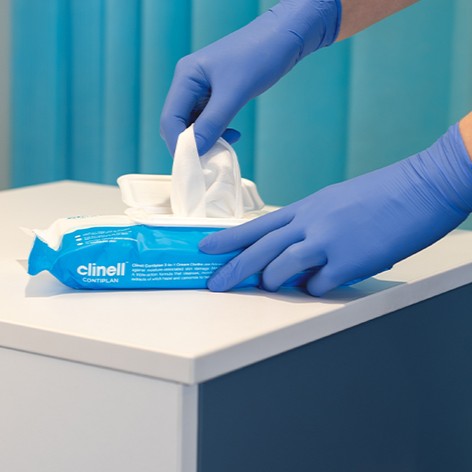
These questions can help you check whether your cleaning schedule covers the surfaces used in practice.
What needs attention between patients?
The interval between appointments is an important opportunity to prepare the clinical environment for the next patient.
NHS England’s standard infection control precautions state that reusable non-invasive care equipment must be decontaminated between patients in line with manufacturers’ instructions. Cleaning protocols should also make responsibilities, frequency and methods clear.
Check that staff know which equipment needs attention, who is responsible and which procedure to follow. Follow the relevant equipment and cleaning product instructions, including compatibility and any specified contact time.
A quick visual check can help identify something that has been missed, but it does not replace the time required to complete cleaning and decontamination correctly.
How can teams maintain consistent cleaning procedures?
In practices with several clinicians, shared procedures help everyone understand what is expected.
A process that feels obvious to an experienced colleague may be less clear to a new starter. Written instructions, accessible cleaning schedules and practical training can help reduce uncertainty.
Review procedures when equipment, products or working arrangements change. Give colleagues an opportunity to raise practical issues, such as cleaning supplies being stored too far from where they are needed or instructions being difficult to find.
The aim is to make the correct process clear and manageable throughout a busy clinic day.
A practical checklist for reviewing clinic routines
Use these questions to start a discussion with your team:
- Coverage: Does the cleaning schedule include the high-touch surfaces and shared equipment currently used?
- Changes: Have new items or changes to the room layout been assessed?
- Instructions: Can staff access the relevant manufacturers’ cleaning and decontamination instructions?
- Products: Are cleaning products suitable for the equipment and surfaces involved?
- Timing: Does the appointment schedule allow staff to complete the required procedures?
- Responsibilities: Is it clear who cleans each item and when?
- Training: Would a new starter know exactly what to do?
- Review: Have issues identified by the team been addressed and the procedures updated?
Use this checklist alongside your clinic’s infection prevention policies, applicable guidance and manufacturers’ instructions.
Taking a fresh look at familiar habits
GAMA Healthcare’s Moments that Matter campaign encourages attention to the everyday actions that support infection prevention.
That message offers a useful starting point for reflection. Which parts of your routine work reliably? Where have changes to the clinic outpaced changes to the procedure? What would a colleague, seeing the room for the first time, notice?
Improvement may involve clarifying an instruction, adding an overlooked item to a schedule or allowing more time between appointments. Sometimes it begins simply by noticing what familiarity has made easy to miss.
Supporting resources and further reading
Explore these resources to support your review:
- GAMA Healthcare: Moments that Matter
- NHS England: National Infection Prevention and Control Manual for England
- NHS England: Standard infection control precautions
Canonbury Healthcare supplies the Clinell range from GAMA Healthcare as part of its wider portfolio of clinical hygiene solutions.

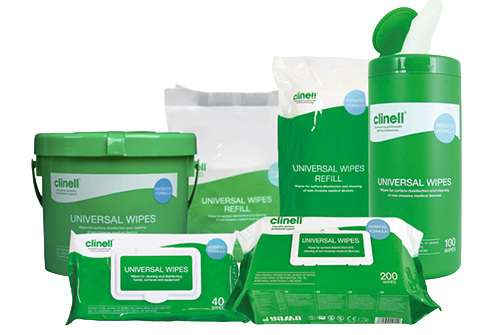
Clinell is a leading brand for infection prevention, offering a wide range of antibacterial wipes, surface disinfectants, and hand hygiene products.
Trusted by healthcare professionals, Clinell combines powerful protection with convenience to support effective infection control in both clinical and domiciliary settings.



Posts