The Complete Guide to Surgical Scalpel Blade Sizes
- Sales Team
- Canonbury Blog
- 5 Oct 2026 views
The Complete Guide to Surgical Scalpel Blade Sizes
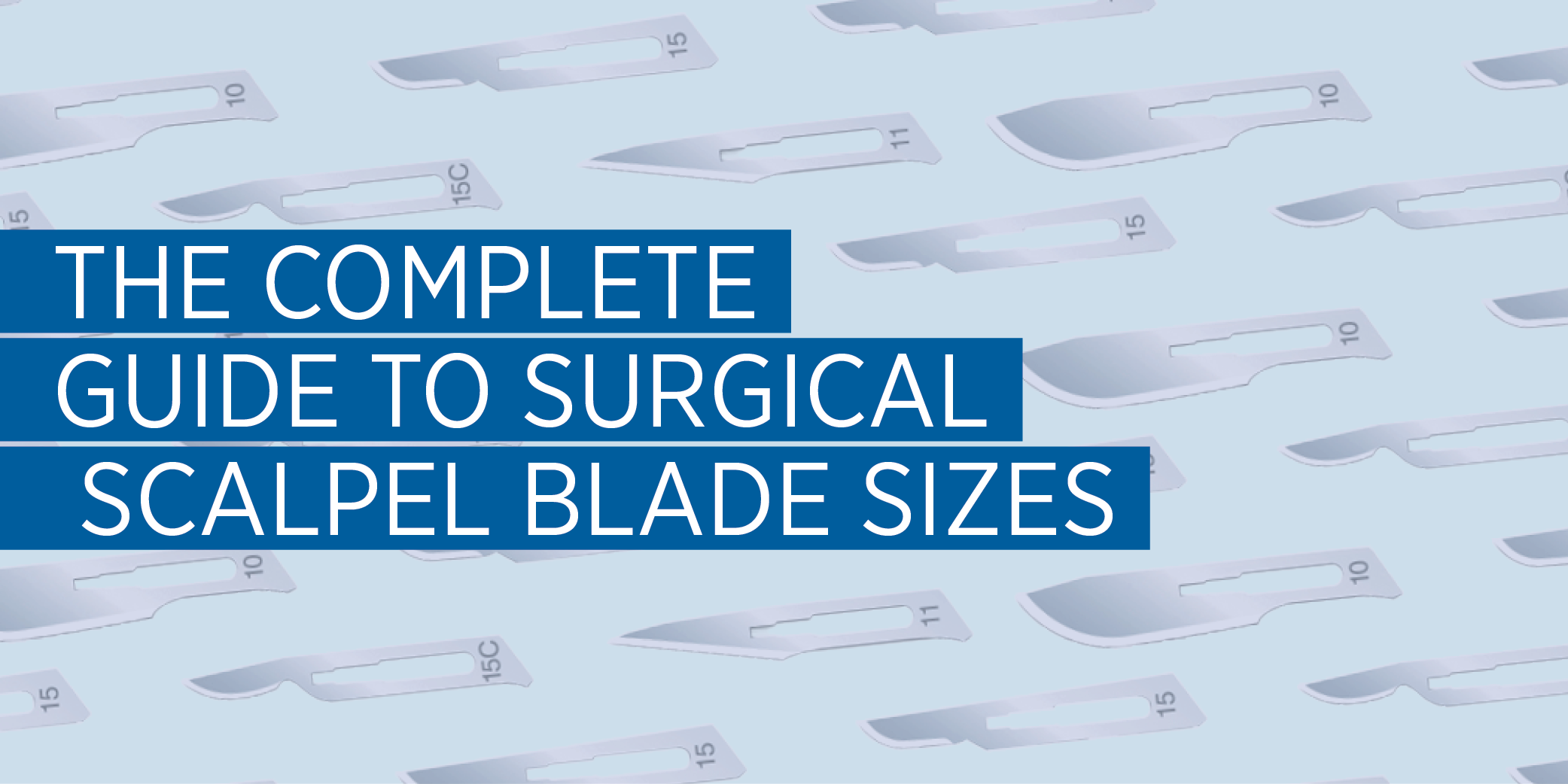
Choosing the right blade is a small decision that shapes the quality of almost every sharp procedure. The correct size and shape gives you control, a clean cutting action and a predictable result, whether you are debriding callus, excising a lesion or making a precise incision in theatre. The wrong one makes the same task harder than it needs to be.
This guide explains the full scalpel blade numbering system in plain terms. It covers what each size blade is used for, which handle each one fits and how the common shapes are applied across podiatry, promary care, minor surgery and wound care. It is written for podiatrists and foot health practitioners, and for the wider group of clinicians and Allied Healthcare Professionals who reach for a blade as part of routine practice.
Please note: This article is a general reference, not a set of clinical instructions. Blade choice, technique and scope of practice vary between settings and between individual clinicians. Always work within your training and follow the procedures and techniques you have been taught.
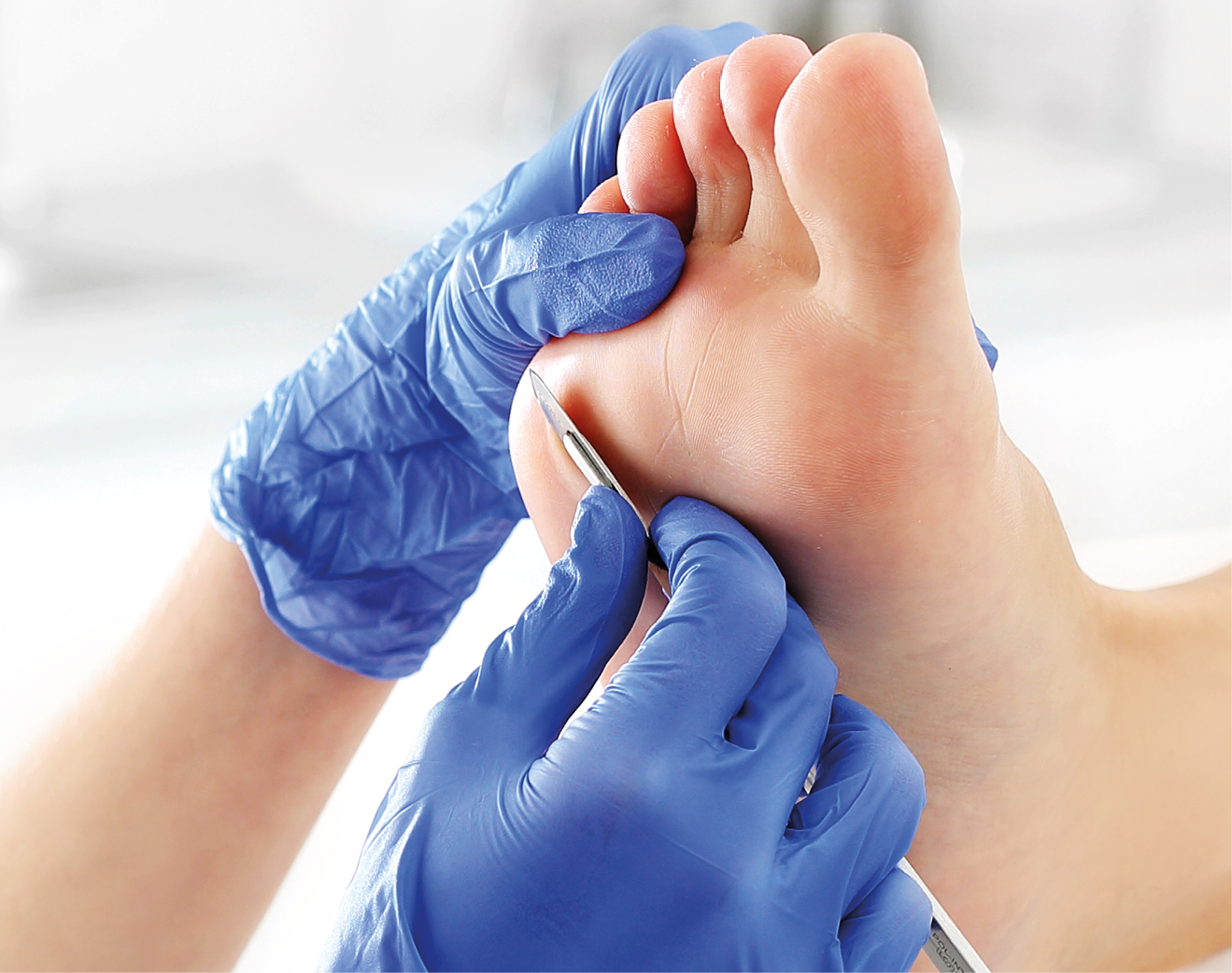
Choosing the right blade is a small decision that shapes the quality of almost every sharp procedure. The correct size and shape gives you control, a clean cutting action and a predictable result, whether you are debriding callus, excising a lesion or making a precise incision in theatre. The wrong one makes the same task harder than it needs to be.
This guide explains the full scalpel blade numbering system in plain terms. It covers what each size blade is used for, which handle each one fits and how the common shapes are applied across podiatry, promary care, minor surgery and wound care. It is written for podiatrists and foot health practitioners, and for the wider group of clinicians and Allied Healthcare Professionals who reach for a blade as part of routine practice.
Please note: This article is a general reference, not a set of clinical instructions. Blade choice, technique and scope of practice vary between settings and between individual clinicians. Always work within your training and follow the procedures and techniques you have been taught.
Surgical blade or scalpel?
The two words are often used to mean the same thing, but there is a useful distinction.
A surgical blade is the blade itself. This is the sterile, single use component that carries the number, such as a No.10 or No.15.
A scalpel is the complete assembled instrument. it is the blade fitted to a handle, ready to use in the hand.
So when people search for "Scalpel blade sizes" they are almost always asking about the numbered surgical blade. Throughout this guide the numbering refers to the blade. When we talk about the finished intstrument, blade plus handle, we call it a scalpel. Keeping the two seperate makes the compatibility question much easier to answer, because the number tells you the shape and the handle tells you the fitment.
How the scalpel blade numbering system works
The numbering system used across the UK and most of the world is long established and standardised. A single manufacturer such as Swann Morton produces around 70 individual blade shapes, yet the day to day range that most clinicians use is far smaller. Each number describes a specific shape, edge and point, so the same number gives you the same blade every time.
Two things sit behind every number:
- The shape and edge. This determines what the blade does well. A curved belly suits sweeping incisions and debridement. A fine triangular point suits stab incisions. A small curved edge suits short, precise cuts.
- The handle fitment. Blades are grouped by the handle they fit clip on to. The smaller blades share one fitment, the larger blades share another. We cover this in full in the compatibility section below.
Blades are supplied sterile and single use, usually individually sealed in colour coded foil and boxed in tens or hundreds. Most popular sizes are available in either carbon steel or stainless steel, which we compare later in the guide.
Scalpel blade sizes and what each blade is used for
Below is a working reference to the blades you are most likely to encounter, grouped by handle fitment. Podiatry applications are included alongside wider surgical and primary care use, so you can see where each shape fits in to practice.
As above, treat this as background rather than direction. The choice of blade for any given procedure rests with the clinician and their training.
The Smaller Blades, (No.3 and No.9 handle fitment)
The No.10 Blade
The No.10 is one of the most traditional shapes and a genuine workhorse. Its curved cutting edge, often called the belly, is built for incisions of varying length in skin and muscle. In podiatry, it is a familiar choice for sharp debridement of callus and hard skin. In wider surgery the same shape appears everywhere from general incisions to more specialised work, including radial artery harvesting during coronary bypass, opening the bronchus in thoracic surgery and incisions in hernia repair. If you only learned one blade first, this is usually it.
The No.10a Blade
The No.10A has a straighter cutting edge and a strong, pointed tip. That strong point makes it a good option for fine, controlled work and minor procedures, including the removal of splinters, thorns and small foreign bodies. It sits alongside the No.10 rather than replacing it.
The No.11 Blade
The No.11 is an elongated triangular blade that tapers to a fine, sharp point. it is designed for stab incisions and precise entry cuts, where control at the very tip is what matters. Typical uses include lancing and draining abscesses, inserting a chest drain and making small, accurate puncture type incisions. It also has a place in podiatry, in the surgical treatment of disorders of the foot, ankle and lower limb. A narrow-ground variant the No.11p offers an extended cutting edge and a long fine point for stab incisions on soft tissue.
The No.12 Blade
The No.12 is a small, crescent or hook-shaped blade sharpened along the inside of the curve. The hooked edge suits a pulling or drawing cut, which is why it is often used as a suture cutter and in procedures where a curved contour needs to be followed. It also appears in dental surgery for raising flaps. The double-edged version, the No.12D, is sharpened on both sides of the curve and is used widely in oral surgery and dermatology.
The No.13, No.14 and No.16 Blades
These are less common shapes within the same smaller fitment range. They are kept for specialist applications rather than everyday use, and most clinicians will reach for a No.10 or No.15 long before these.
The No.15 Blade
The No.15 is one of the most popular and versatile blades of all. It has a small, curved cutting edge with a straight point, which makes it ideal for short and precise incisions. In podiatry it is a mainstay for sharp debridement of hyperkeratotic tissue and for careful work around lesions and their margins. In primary care and minor surgery it is a common choice for excising small skin lesions and sebaceous cysts and for making delicate incisions where accuracy counts more than reach. Its small footprint is exactly why it is so widely used.
The No.15C, No.15T and other No.15 variants
Several variants build on the classic No.15. The No.15T is often selected for enucleation of corns in podiatry, where the nucleus of a hard corn is carefully reduced. The No.15C is a variant used in dentistry and fine surgical work. Each keeps the precise, short-incision character of the No.15 while adjusting the edge or point for a particular task.
The E/11 and specialist podiatry shapes
Some shapes are strongly associated with chiropody and podiatry. The E/11, and the Sabre E/11, carry a closed, razor-like cutting edge that suits the removal of hard skin and callus, and they remain popular for exactly this work. Beyond these, specialist fine single-bevel shapes act like a small chisel for precise work in and around the nail. These are more specialist than the everyday numbered range, but they are worth knowing if nail and skin work is central to your practice.
The larger blades, (No.4 handle fitment)
The No.20, 21, 22, 23 and 24 blades
These are the larger curved blades, built for the bigger No.4 handle. The No.20, No.21 and No.22 are essentially scaled-up versions of the No.10, each carrying the same curved cutting edge on a progressively larger blade with a flat, unsharpened back. They are used for longer incisions in skin and muscle in general and orthopaedic surgery, and the No.22 in particular is used for skin incisions in cardiac and thoracic surgery. The No.23 and No.24 are further large blades in the same family. They rarely feature in routine podiatry, but they are core to theatre work, which is why they belong in any complete guide to blade sizes.
Scalpel Blade and Handle Compatibility
Blade choice is only half the picture. A blade has to match its handle, and this is where the numbering system helps. Blades are grouped by fitment, so once you know the fitment, you know your options.
There are two main fittings to remember:
- No.3 Fitment. This carries the smaller blades, including the No.10, No.11, No.12 and No.15 families. The No.9 handle is a slimmer handle that takes the same smaller blades, and is popular where a lighter instrument helps with fine work.
- No.4 Fitment. This carries the larger blades, such as the No.20, No.22 and No.24. The table below is a quick reference. Use it as a scalpel blade size chart to match blade, handle and typical use area at a glance.
Blade Comparison Table
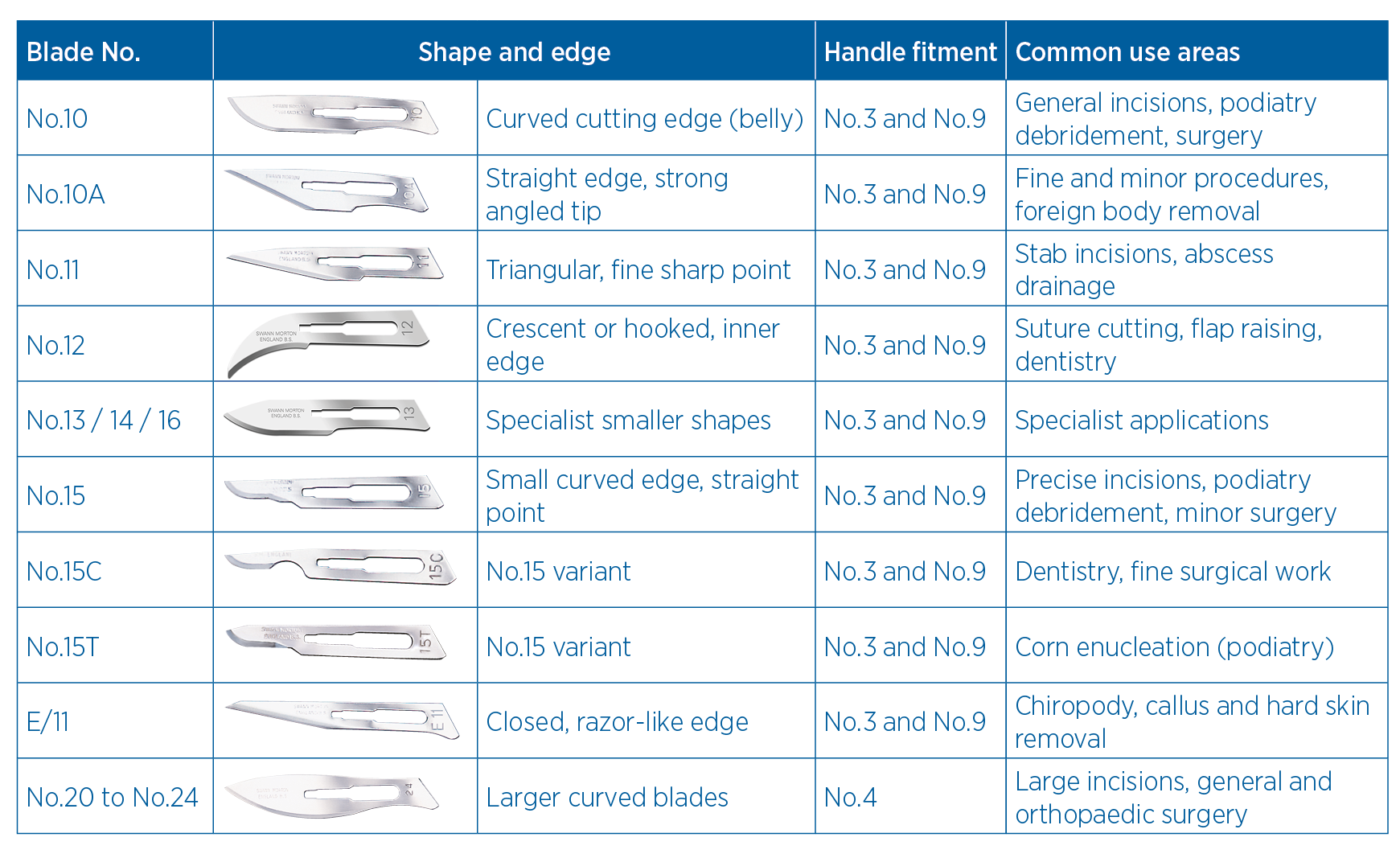
Kiato surgical blades fit standard No.3 and No.9 handles. so they slot straight into the setup most clinics already use. You can view the compatible handles, including the No.3 graduated, the No.4 graduated and the slimmer No.9. On the Swann Morton scalpel handles page.
if you are ever unsure what scalpel you are holding, the fitment is the thing to check, not the brand, because blade and handle fittings are standardised across makes.
Blade Materials: Carbon Steel vs. Stainless Steel
Most popular blades are offered in two materials, and the choice comes down to what you value most.
Carbon steel takes an exceptionally fine, keen edge and is prized for sharpness straight out of the pack. It is a common choice where a clean, effortless first cut matters. Kiato carbon steel blades are made from Swiss carbon steel, which is selected for exactly this combination of sharpness and consistency.
Stainless steel trades a fraction of that ultinate keenness for greater corrosion resistance. it is a dependable all-rounder which stands up well to moisture and storage. Neither is universally better. many clinicians keep both to hand and match the material to the task. Kiato blades are available in both materials, so you are not forced to comprimise.
Blade use in Podiatry
Sharp skin work is central to podiatric practice, and the blade is at the heart of it. Corns and Calluses build up in high pressure areas such as metatarsal heads, the sides and tops of the toes and the heel, and they need regular reduction. Scalpel debridement is widely regarded as the standard approach for painful plantar callus, and it is a skill that defines much of routine clinical care.
In practice, the No.10 and No.15 do most of the everyday work, paring hard skin back in thin, controlled layers so the healthy tissue below is left intact. For a hard corn, or heloma durum, enucleation reduces the painful nucleus, and the No.15T is a shape often chosen for this. The E/11 remains a favourite for removing areas of hard skin thanks to its closed, razor like edge. For nail work, from thickened and involuted nails through to nail surgery, finer specialist shapes give the control that delicate work around the nail demands.
The common thread is control, the right blade kept sharp and single use, let's you remove exactly what needs removing and no more. As with every technique in this guide, th emethod you use should follow your own training and the protocols of your setting.
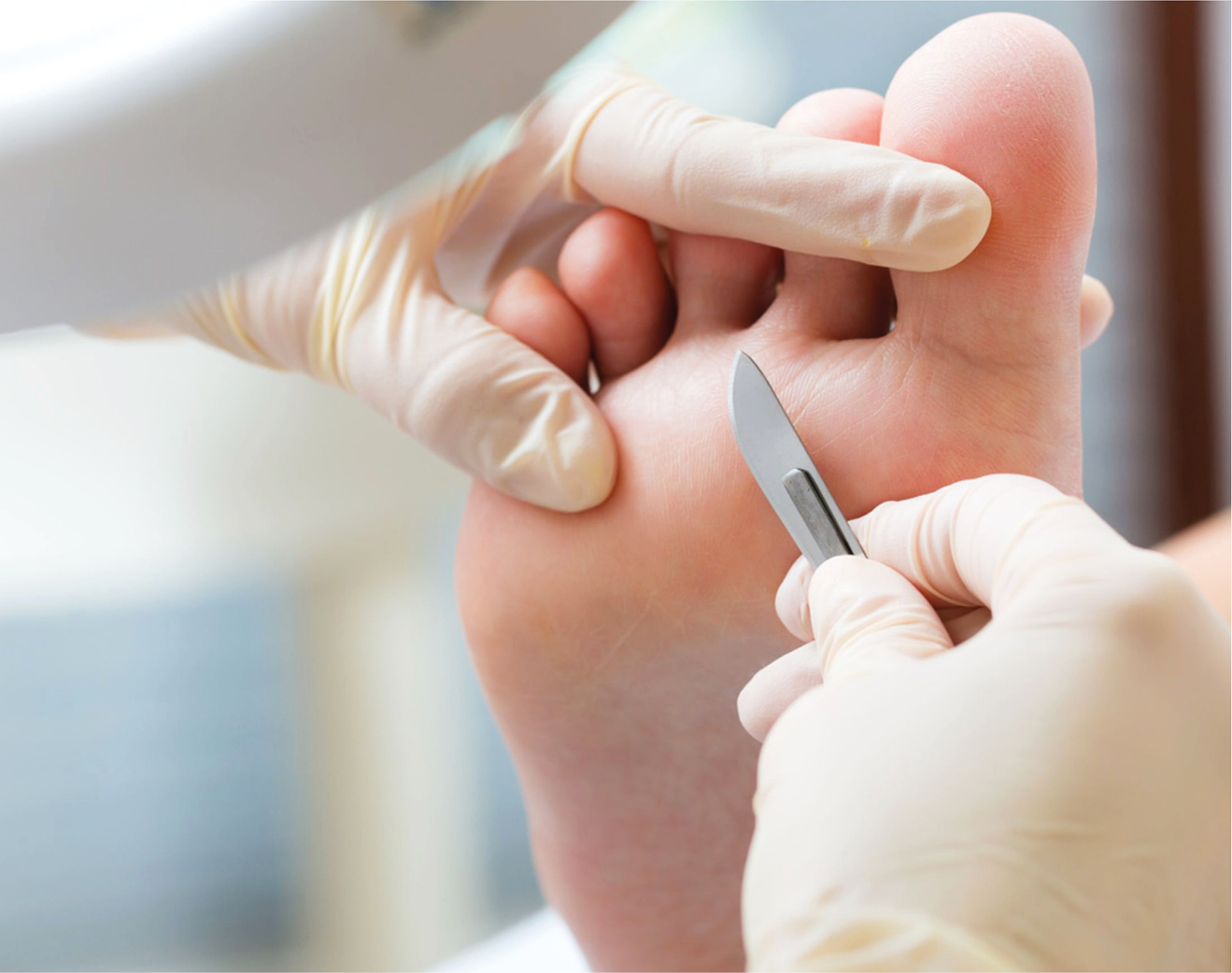
Sharp skin work is central to podiatric practice, and the blade is at the heart of it. Corns and Calluses build up in high pressure areas such as metatarsal heads, the sides and tops of the toes and the heel, and they need regular reduction. Scalpel debridement is widely regarded as the standard approach for painful plantar callus, and it is a skill that defines much of routine clinical care.
In practice, the No.10 and No.15 do most of the everyday work, paring hard skin back in thin, controlled layers so the healthy tissue below is left intact. For a hard corn, or heloma durum, enucleation reduces the painful nucleus, and the No.15T is a shape often chosen for this. The E/11 remains a favourite for removing areas of hard skin thanks to its closed, razor like edge. For nail work, from thickened and involuted nails through to nail surgery, finer specialist shapes give the control that delicate work around the nail demands.
The common thread is control, the right blade kept sharp and single use, let's you remove exactly what needs removing and no more. As with every technique in this guide, th emethod you use should follow your own training and the protocols of your setting.
Blade use Beyond Podiatry: primary care, surgery and wound care
The same numbered blades turn up right across clinical practice, which is part of what makes the system so useful to learn once.
In primary care and minor surgery, the No.15 is the reliable choice for excising small skin lesions, taking punch or shave biopsies and making the delicate, accurate incisions that minor operations call for. The No.11 supports stab incisions and the drainage of abscesses.
In theatre and general surgery, the No.10 handles general incisions, while the larger No.20, No.22 and No.23 take the longer cuts in skin and muscle. The No.15 covers the finer, more detailed work. Specialist shapes such as the No.12 have their own established roles in areas from dentistry to head and neck surgery.
in wound care and tissue viability, sharp debridement with a blade is a recognised way to remove non-viable tissue and hyperkeratotic edges so that a wound can progress. The No.10 and No.15 both feature here, chosen for reach or precision as the wound demands. The blades also cut across into vetirinary practice, where the same shapes are used often with longer handles. Wherever they are used the principle is the same. the number tells you the shape, the shape suits the task, and the clinicians training determines the approach.
Safety, Single use and Sharps Disposal
Modern surgical blades are designed for single use. A fresh blade is reliable sharp and reliably sterile, which protects both the result and the patient by removing any risk of cross-contamination from reuse. Colour coded, individually sealed packaging helps you confirm the size at a glance and confirm sterility up to the point of use.
Safe handling matters just as much as the cut itself. Loading and unloading blades with a dedicated blade remover keeps fingers away from the edge, and prompt disposal into a compliant sharps disposal container closes the loop. If you want to review your consumables around this then explore our our sharps removal range.
Kiato surgical blades and scalpels from Canonbury
Canonbury stocks the full kiato range of sterile, single use blades, precision engineered from Swiss carbon steel for sharpness and consistency. Every option below fits standard No.3 and No.9 handles, and you can browse the complete range on the Kiato blades page.
- Kiato Carbon Steel Surgical Sterile Blades - Swiss carbon steel blades with a curved cutting edge, designed for small and precise incisions. Available in No.10 and No.15 the two everyday podiatry sizes.
- Kiato Stainless Steel Surgical Sterile Blades - A broad range of sizes for different applications, from fine precision blades to small and large curved edges and long triangular blades. Conform to BS2982 and Medical Device Directive 93/42/EEC
- Kiato Carbon Steel Sterile Gouge Blades - A shaped profile for nail and fine skin work, individualy packaged and available in 1mm and 2mm.
- Kiato Disposable Scalpel - A blade preassembled onto a handle with a retractable safety sheath for safe, one handed use individually wrapped for sterility.
To complete the scalpel, pair your blades with the right handle from the Swann Morton scalpel handles range, and explore the wider Swann Morton blades selection for specialist shapes. You can also shop all of our blades and scalpels for everything in one place. If you are not sure which blade suits your practice, our sales team is happy to advise.
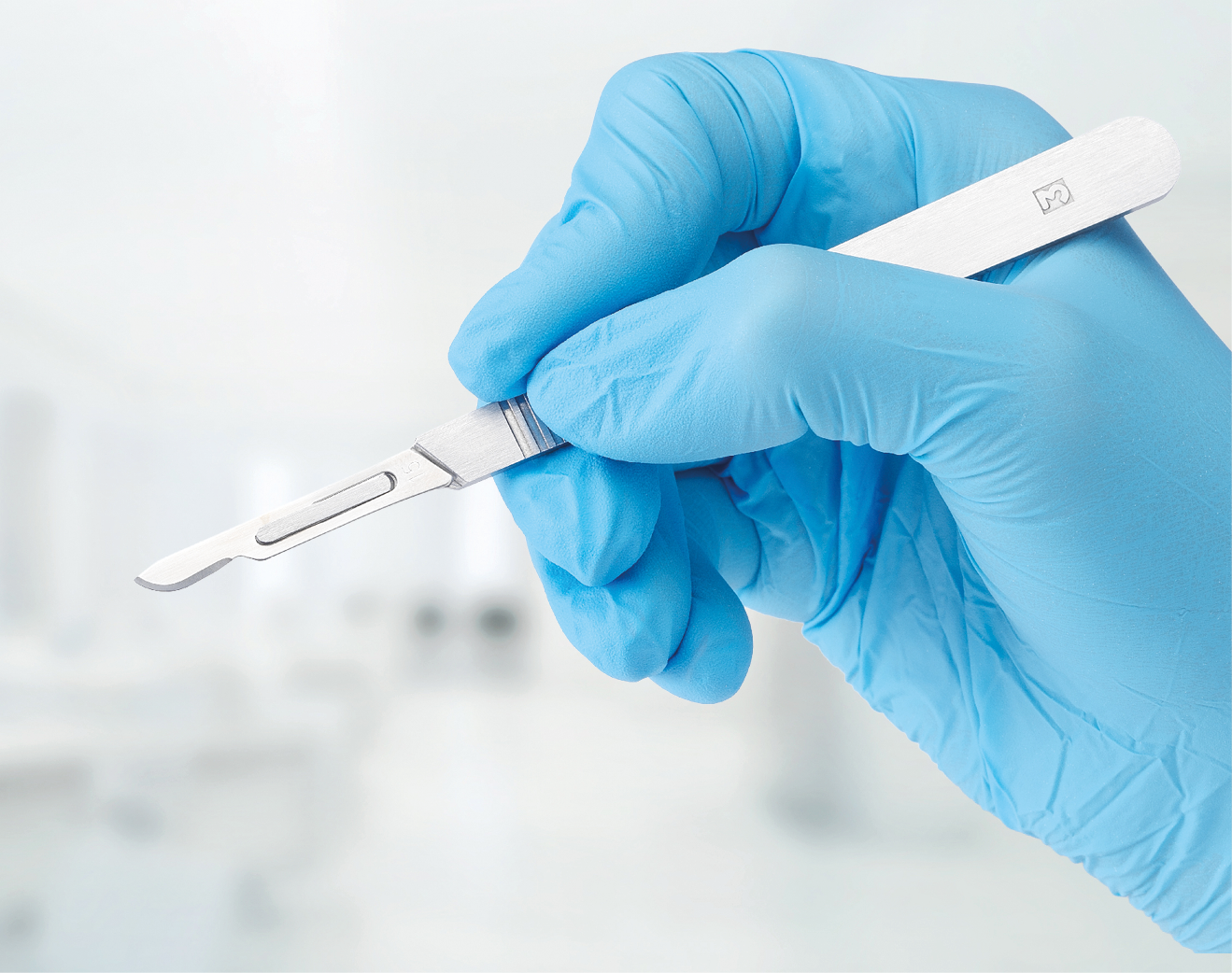
To complete the scalpel, pair your blades with the right handle from the Swann Morton scalpel handles range, and explore the wider Swann Morton blades selection for specialist shapes. You can also shop all of our blades and scalpels for everything in one place. If you are not sure which blade suits your practice, our sales team is happy to advise.
Frequently Asked Questions
What is a No.10 blade used for?
The No.10 has a curved cutting edge and is used for incisions of varying length in skin and muscle. In podiatry, it is a common choice for sharp debridement of callus and hard skin, and in wider surgery it is used for general and more specialised incisions. It fits standard No.3 and No.9 handles.
What is a No.15 blade used for?
The No.15 has a small curved cutting edge with a straight point, which makes it ideal for short and precise incisions. In podiatry, it is widely used for sharp debridement of hyperkeratotic tissue and careful work around lesions. In primary care and minor surgery, it is used for excising small skin lesions, taking biopsies and making delicate incisions. It fits standard No.3 and No.9 handles.
Is a No.10 or No.15 blade bigger?
The No.10 is the bigger of the two. It has a larger curved cutting edge for incisions of varying length in skin and muscle. The No.15 is smaller, with a short curved edge and a straight point suited to short, precise incisions and fine debridement. Both fit the same No.3 and No.9 handles.
What is the difference between a No10 and a No11 blade?
Shape and purpose. The No.10 has a curved cutting edge for slicing incisions of varying length, which makes it a general workhorse. The No.11 is an elongated triangular blade with a fine, sharp point, for stab incisions and precise puncture-type cuts such as lancing an abscess or inserting a chest drain. The No.10 draws a longer cut; the No.11 makes a controlled, point-first entry.
What is a No.12 blade used for in surgery?
It is a small, crescent or hook-shaped blade sharpened on the inside of the curve. The hooked edge suits a pulling cut, so it works as a suture cutter and for procedures following a curved contour, including arteriotomies and work around the palate and nasal septum. In dental surgery, it raises flaps. The double-edged No.12D is used widely in oral surgery and dermatology.
What are the most common scalpel blade sizes?
The most frequently used blades are the No.10, No.11, No.12 and No.15, all of which share the smaller No.3 and No.9 handle fitment. In podiatry, the No.10 and No.15 do most of the everyday work. In theatre, larger blades such as the No.20 and No.22 are used for longer incisions on the No.4 handle.
Which handle do I need for my blade?
The smaller blades, including the No.10, No.11, No.12 and No.15 families, fit the No.3 handle and the slimmer No.9 handle. The larger blades, such as the No.20, No.22 and No.24, fit the No.4 handle. Kiato blades fit standard No.3 and No.9 handles. See the compatibility table above for a full breakdown.
What is the difference between a surgical blade and a scalpel?
A surgical blade is the blade on its own, the sterile single-use component that carries the number. A scalpel is the complete instrument, meaning the blade fitted to a handle and ready to use. The numbering system refers to the blade.
What blade is best for removing calluses and corns?
Sharp debridement of callus is commonly carried out with a No.10 or No.15, working in thin controlled layers. For enucleation of a hard corn, the No.15T is a shape often chosen. The E/11 is also popular for removing hard skin. Blade choice and technique should always follow your own training.
Posts